
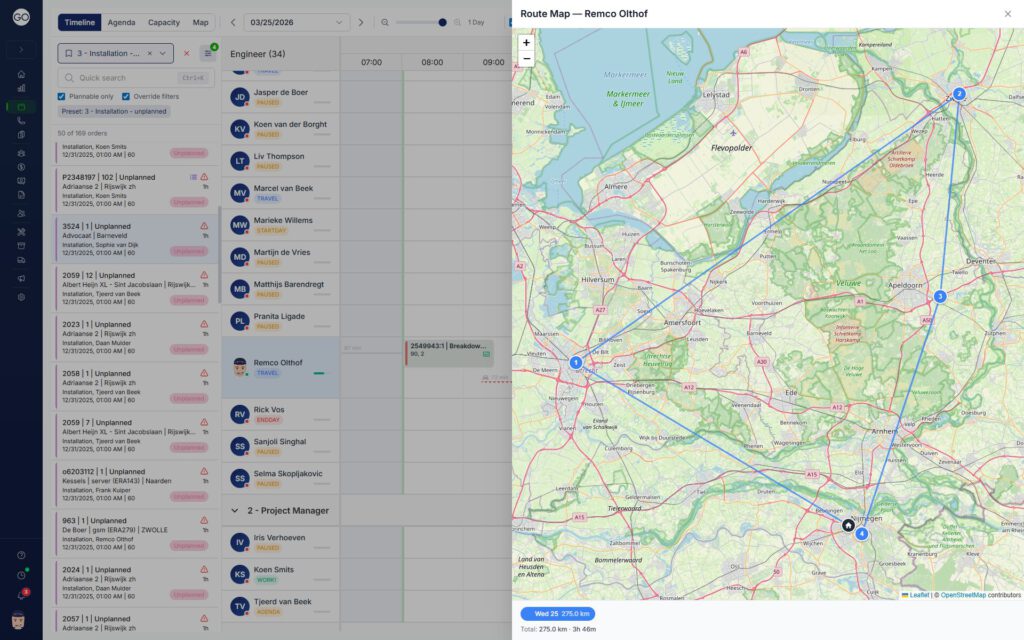
Route optimization in field service uses advanced algorithms to calculate the most efficient paths for technicians, minimizing travel time and distance while maximizing service capacity. It considers factors like technician location, skills, traffic patterns, and appointment windows to create optimal schedules. This technology addresses common field service challenges, including fuel costs, technician productivity, and customer satisfaction, through better routing decisions.
What is route optimization and how does it work in field service?
Route optimization is technology that automatically calculates the most efficient paths and schedules for field service technicians visiting multiple locations. The system uses algorithms to analyze factors like distance, traffic conditions, technician skills, and appointment windows to create optimal daily routes.
The technology works by processing multiple data points simultaneously, including:
- Starting locations: Where each technician begins their day, whether from home, office, or previous job site
- Geographical mapping: The physical distance and proximity between scheduled service appointments
- Skill requirements: Matching technician certifications and expertise to specific job demands
- Time constraints: Customer appointment windows and estimated service duration for each task
- Traffic intelligence: Real-time and historical traffic data to avoid congested routes and delays
These integrated factors work together to create a comprehensive routing strategy that maximizes efficiency while maintaining service quality. Modern field service software platforms integrate route optimization directly into dispatch scheduling, automatically suggesting optimal sequences when work orders are assigned. This eliminates guesswork from manual scheduling and ensures your field service technician teams spend maximum time serving customers rather than navigating between locations, while the algorithms continuously learn from historical data to improve accuracy and handle complex scenarios like emergency calls and multi-day scheduling.
Why do field service companies need route optimization?
Field service companies need route optimization because manual scheduling creates inefficiencies that directly impact profitability and customer satisfaction. Without optimization, dispatchers often rely on guesswork, leading to longer travel times, higher fuel costs, and missed appointment windows that frustrate customers.
The critical challenges that route optimization addresses include:
- Excessive fuel expenses: Inefficient routing causes technicians to zigzag across territories or backtrack unnecessarily, rapidly accumulating fuel costs
- Limited daily capacity: Poor routing reduces the number of jobs each technician can complete, directly limiting revenue potential and service capacity
- Customer service issues: Manual scheduling often results in inaccurate arrival estimates and frequent delays that damage customer relationships
- Scalability problems: What works for managing five technicians becomes chaotic with twenty, creating administrative bottlenecks
- Dispatcher inefficiency: Manual route planning consumes valuable time that could be spent on customer service and business development
These interconnected problems compound as field service operations grow, making route optimization essential for maintaining competitive advantage. The technology provides transparency through accurate arrival time estimates, builds customer trust by reducing delays, and scales seamlessly with business expansion while freeing dispatchers to focus on strategic activities rather than daily scheduling puzzles.
How does route optimization actually reduce field service costs?
Route optimization reduces field service costs through multiple channels, with fuel savings being the most immediate benefit. Optimized routes can reduce daily travel distances by 20–30%, directly cutting fuel expenses and vehicle wear. Less driving also means reduced vehicle maintenance costs and extended fleet lifespan.
The primary cost reduction areas include:
- Fuel and vehicle expenses: Shorter, more efficient routes reduce daily mileage by up to 30%, cutting fuel costs and extending vehicle lifespan through reduced wear
- Technician productivity gains: Less travel time means more completed jobs per day, improving workforce utilization and revenue per technician
- Overtime elimination: Proper route planning prevents late-running schedules that push final appointments into expensive overtime hours
- Administrative efficiency: Dispatchers spend less time on manual planning and customer complaint management, redirecting effort toward revenue-generating activities
- Emergency response optimization: Quick identification of nearest available technicians reduces disruption costs and improves urgent call response times
These cost reductions create a compounding effect throughout field service operations. When technicians maintain regular working hours while completing more jobs, companies can either serve more customers with existing staff or maintain service levels with fewer technicians. The administrative time savings allow dispatchers to focus on scheduling additional services and following up on customer needs, while optimized emergency responses minimize both disruption to planned routes and customer dissatisfaction from delayed urgent services.
What factors should field service managers consider when choosing route optimization?
Field service managers should prioritize integration capabilities when selecting route optimization solutions. The system must connect seamlessly with your existing ERP systems, customer management platforms, and scheduling tools. Without proper integration, you’ll create data silos that reduce efficiency rather than improve it.
Key evaluation criteria for route optimization solutions include:
- Integration capabilities: Seamless connection with existing ERP systems, customer management platforms, and scheduling tools to prevent data silos
- Real-time traffic intelligence: Dynamic route adjustments based on current traffic conditions, road closures, and weather impacts rather than static distance calculations
- Technician skill matching: Consideration of certifications, experience levels, and specializations when assigning work orders to improve first-time fix rates
- Appointment flexibility: Support for various appointment types, from precise time slots to flexible windows, plus accommodation for emergency calls
- Scalability and accessibility: Ability to handle projected team growth and service area expansion with mobile access for field personnel
These factors work together to determine long-term solution value and operational success. Systems with strong integration capabilities ensure data flows smoothly between platforms, while real-time traffic data provides accuracy that static routing cannot match. Skill-matching capabilities reduce callbacks and improve customer satisfaction, while appointment flexibility maintains service quality standards. Scalable solutions with mobile accessibility support business growth and ensure both technicians and dispatchers can access critical route information regardless of location.
Route optimization transforms field service operations by reducing costs, improving customer satisfaction, and increasing operational efficiency. When selecting a solution, focus on integration capabilities, real-time data processing, and scalability to ensure long-term value. At Gomocha, we understand that keeping customers happy while optimizing revenue requires the right technology foundation that grows with your business needs.
If you are interested in learning more, start your efficiency assessment today.